
What is digital harvest planning?
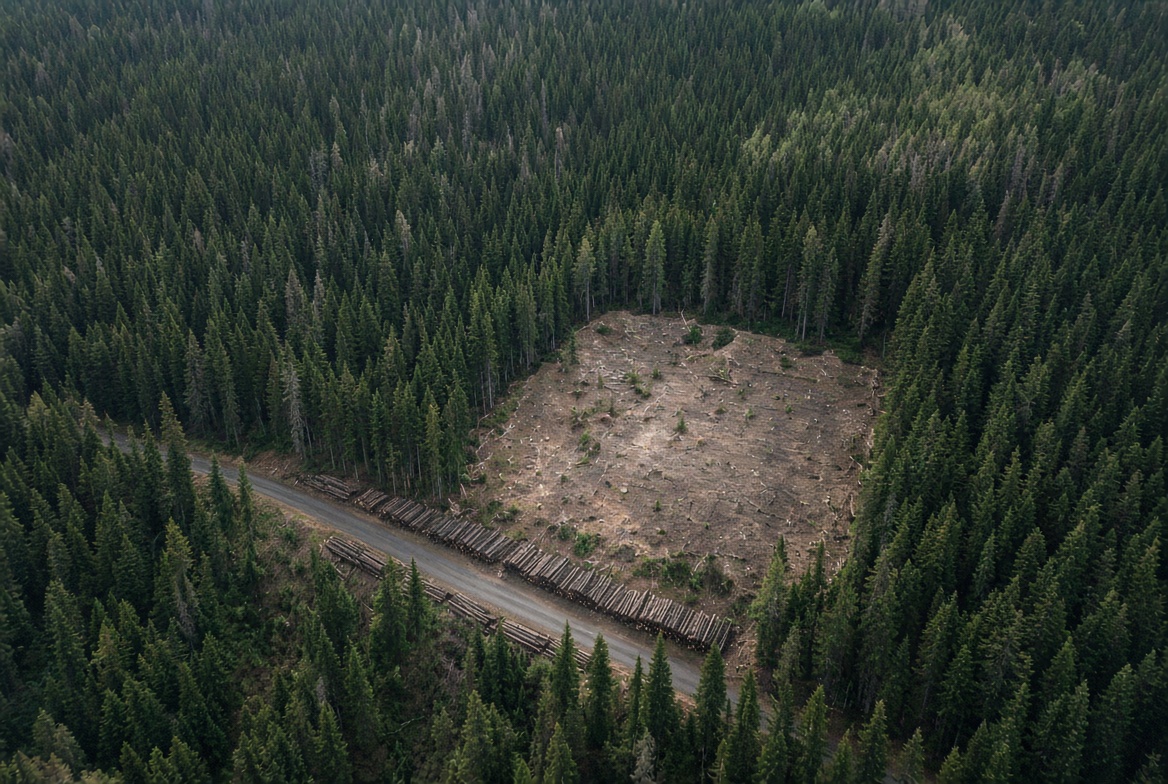
In Latvia, planning a cirsma — a cut block, the area of forest approved for felling — still largely happens in Excel sheets, email threads and loose PDFs. That works while volumes are small. As the number of jobs grows, the mistakes creep in: out-of-date buyer prices, a misjudged distance to the mill yard, permits from the State Forest Service (VMD) that nobody can find.
What does digital harvest planning mean?
It means the whole cycle lives in one system: State Forest Register data, the VMD felling permit, the stand map, the assortment forecast, buyer prices, work orders and the records that follow. Harvest planning software doesn't replace a harvesting manager's experience — it takes the admin off their plate and lets them decide faster.
The typical stages
- Register data and permit — the cadastral number, stands from the State Forest Register, import of the VMD felling permit and drawing the cut-block boundary on the map.
- Planning and prices — tree tallying in the stand (dastošana), an assortment forecast, a bucking matrix, and buyer prices compared alongside the estimated haul distance to each mill.
- Felling and supervision — a work order built in a step-by-step wizard with a cut list and a buyer and price for each assortment; machine operators send their daily reports from a phone, even without signal.
- Forwarding and the roadside landing — stock levels at the landing, trips logged from the driver's phone and a mySilva waybill PDF for each load.
- Measurement and settlement — importing mill measurement files (CSV) and matching them to trips, settlements, profit and loss per work order, and a document archive.
Why Excel is no longer enough
Excel is flexible, but it has no sense of geography: a spreadsheet can't show you which mill yard is closest to a given cut block, or which buyer pays more for a particular assortment. Price lists go stale every week, too — without a single source of truth, each person on the team works from different numbers.
What to look for in software
Good harvest planning software for Latvia ties together three things: register data, buyer prices and the work-order flow. On top of that it's worth having VMD permit import, price list import from Excel, PDF or scanned files, and an FSC requirement checklist with evidence if you handle certified timber.
Next step
To see what the full cycle looks like in one workspace, take a look at mySilva for companies — from register data and the VMD permit through to mill measurements and settlements. For more on the planning stage itself, see harvest planning.